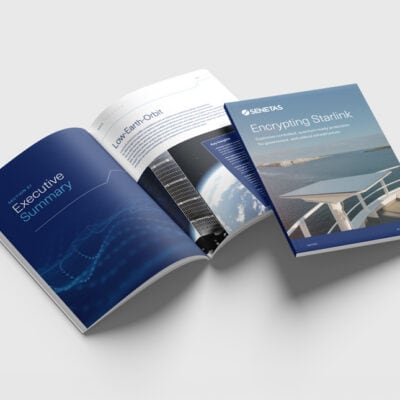
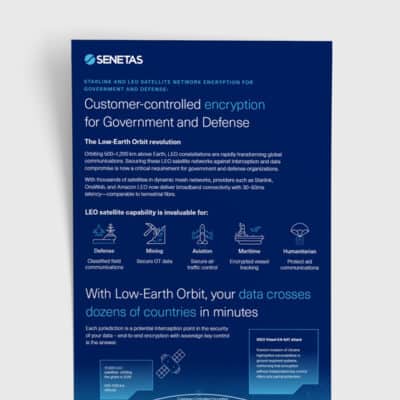
As global operations push beyond the reach of terrestrial fibre, Low-Earth-Orbit (LEO) satellite networks like Starlink are delivering unprecedented high-throughput, low-latency connectivity to the most remote environments—from defense missions and maritime vessels to critical infrastructure. However, this transformative power introduces complex security and compliance challenges.
Blurred Trust Boundaries in LEO Networks
Modern LEO constellations rapidly traverse multiple jurisdictions, with terminals, satellites, and ground gateways often residing in different nations. While providers such as Starlink offer link-level encryption (AES-256) between the terminal and the satellite, all cryptographic keys and firmware remain solely under the provider’s control.
This provider-controlled trust model means:
- Decryption occurs inside the provider’s ground infrastructure, creating a vulnerable attack vector before the data re-enters your private network.
- The customer lacks sovereign key control and audit visibility, making it impossible to meet stringent compliance mandates (e.g., FIPS 140-3, Common Criteria, DISP) which require the customer to own the cryptographic boundary.
- The path to quantum-safe readiness is opaque and dependent on the provider’s upgrade schedule, leaving sensitive data vulnerable to harvest-now, decrypt-later quantum threats.
For mission-critical, regulated, or classified use cases, relying on the provider’s encryption is insufficient. The data owner must regain end-to-end cryptographic control.
LEO and Satellite Network Encryption for Government and Defense
Senetas High Speed Encryptors (HSE) provide a certified, quantum-safe overlay that enforces a zero-trust model over any LEO connection, converting the Starlink link from “secure transport you must trust” into confidential transport you control.
By deploying a Senetas HSE device at each endpoint, you establish a cryptographic boundary that is independent of the satellite provider, ensuring:
- Exclusive Key Ownership: Only customer-owned equipment processes plaintext. The provider sees only ciphertext, neutralising risks from insider threats, lawful access, or subpoenas.
- Guaranteed Compliance: HSE devices hold internationally recognised certifications (FIPS 140-3 Level 3, Common Criteria EAL4+), providing the verifiable compliance artefacts and auditable crypto policy required for defence, government, and critical infrastructure networks.
- Optimal Performance: Unlike cumbersome, overhead-heavy VPN solutions like IPSec/NAT-T, Senetas HSE offers hardware-based, tunnel-free encryption with near-zero latency (less than 10 µs) and an optimized Layer 4 mode. This approach delivers greater throughput efficiency, especially with small packets, without compromising the LEO link’s performance.
- Quantum Readiness: Customers can immediately deploy quantum-safe encryption capabilities, ensuring long-term resilience and forward secrecy regardless of the LEO provider’s technology roadmap.
Senetas allows you to confidently leverage the speed and reach of LEO satellite communication while maintaining complete data sovereignty and end-to-end confidentiality.