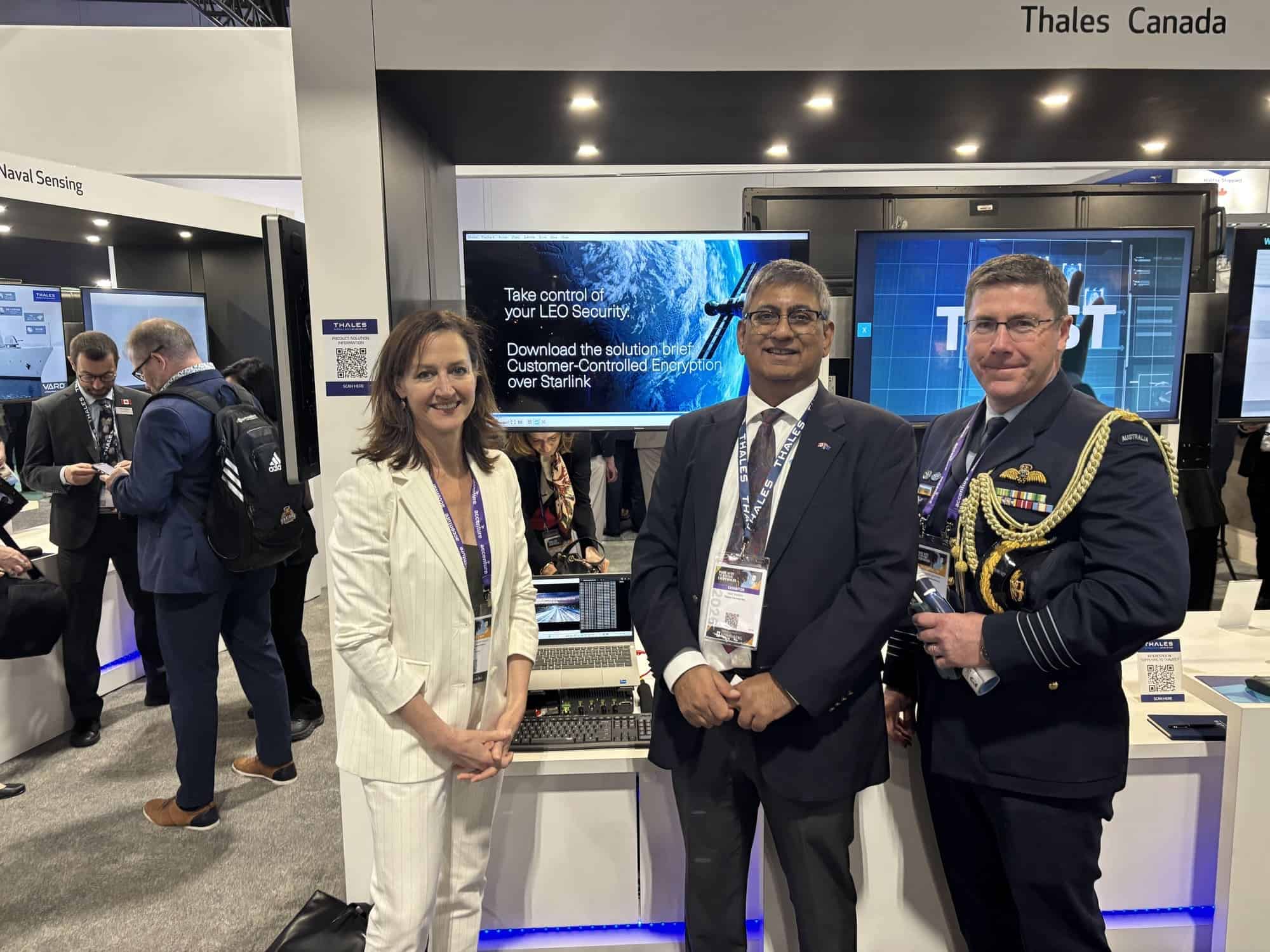
 Photo: Australian High Commissioner to Canada, Her Excellency Kate Logan visiting Thales Canada booth with Nish Kawale from Senetas and a member of the Australian Defence Force.
By Nish Kawale, Vice President Sales Engineering, Americas
At this year’s CANSEC, hosted by the Canadian Association of Defence and Security Industries, I joined Thales Canada, on their booth. It was a pleasure to meet so many passionate and engaged security and defence professionals.
There was considerable discussion around Post Quantum Security and to protect data from the “Harvest Now Decrypt Later” threat posed by Quantum Computing. This was not unexpected as the Canadian government has its plan for PQC readiness in place, with a target of completing PQC migration of high-priority systems by end of 2031. This aligns closely with how we are already supporting our customers for PQC readiness. We provide quantum-resistant encryption built on the latest NIST post-quantum algorithms, applied across your entire network topology within hours, not a multi-year program or a cross-vendor negotiation. Overnight, your network is protected.
I also had the pleasure of meeting Australia’s High Commissioner to Canada, Her Excellency Kate Logan, when she visited our booth and I demonstrated Australian innovation in securing data in motion.
As Prime Minister Mark Carney addressed delegates: “protecting our sovereignty requires more than conventional defence… It requires digital sovereignty, starting with a cloud solution for all intelligence infrastructure.” With rising distrust driven by current geopolitical fragmentation, there is growing interest in solutions that deliver digital sovereignty — and the ability to deploy custom cryptographic algorithms is a key driver of that demand.
We also saw strong interest in our recent white paper on securing Starlink for mission-critical environments. Across Canada organizations are increasingly turning to Low Earth Orbit (LEO) satellites for high-speed, low-latency connectivity across remote and rural areas, and LEO communications are fast becoming critical infrastructure. Organizations should embrace the benefits of these networks while ensuring that control of their own keys, cryptography, and security policy remains firmly in their hands.
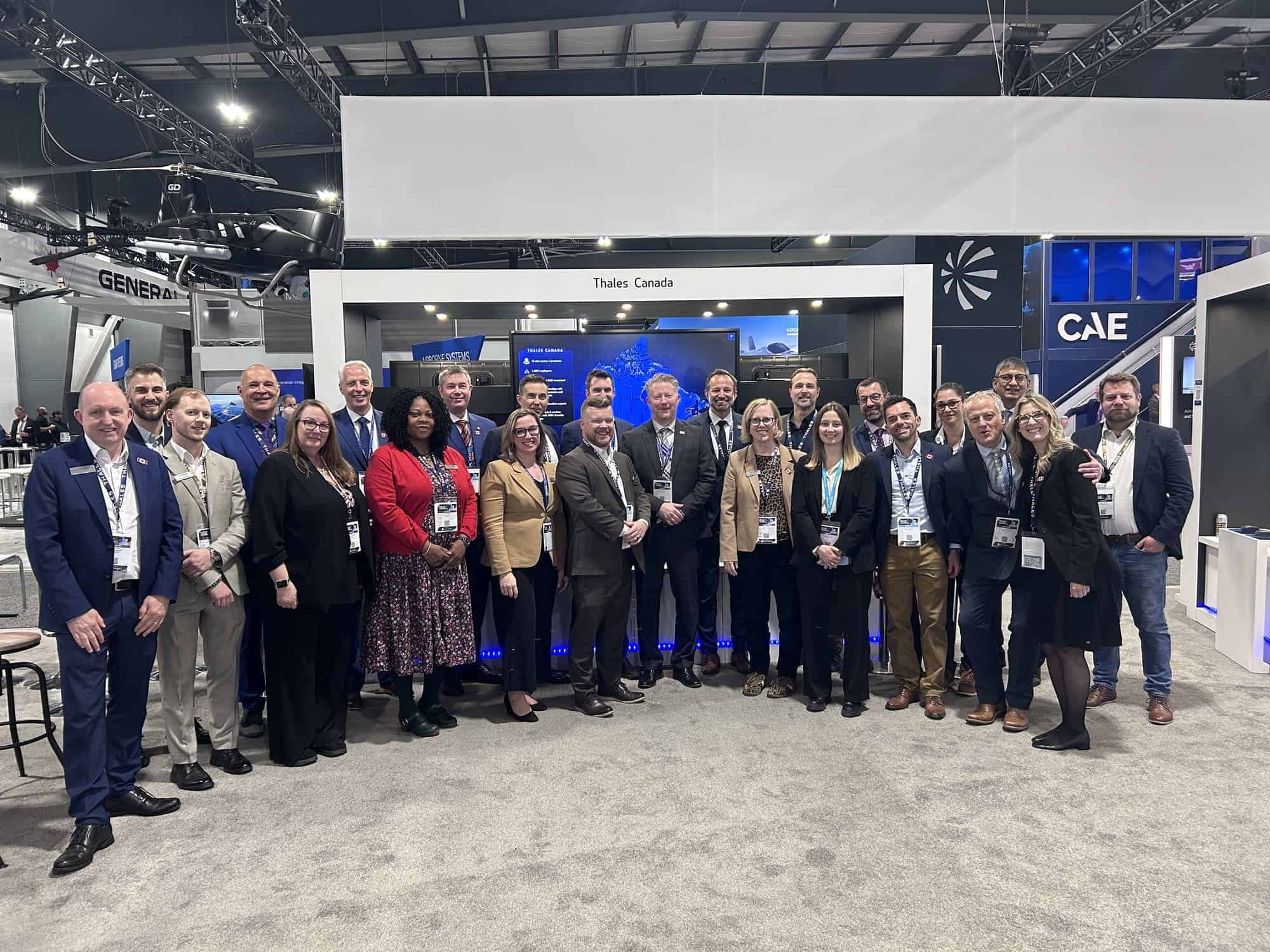
Photo: Thales Canada team