WEST 2026 – USNI News Highlights & Senetas Insights
Jim Alexander, Vice President Business Development, Americas
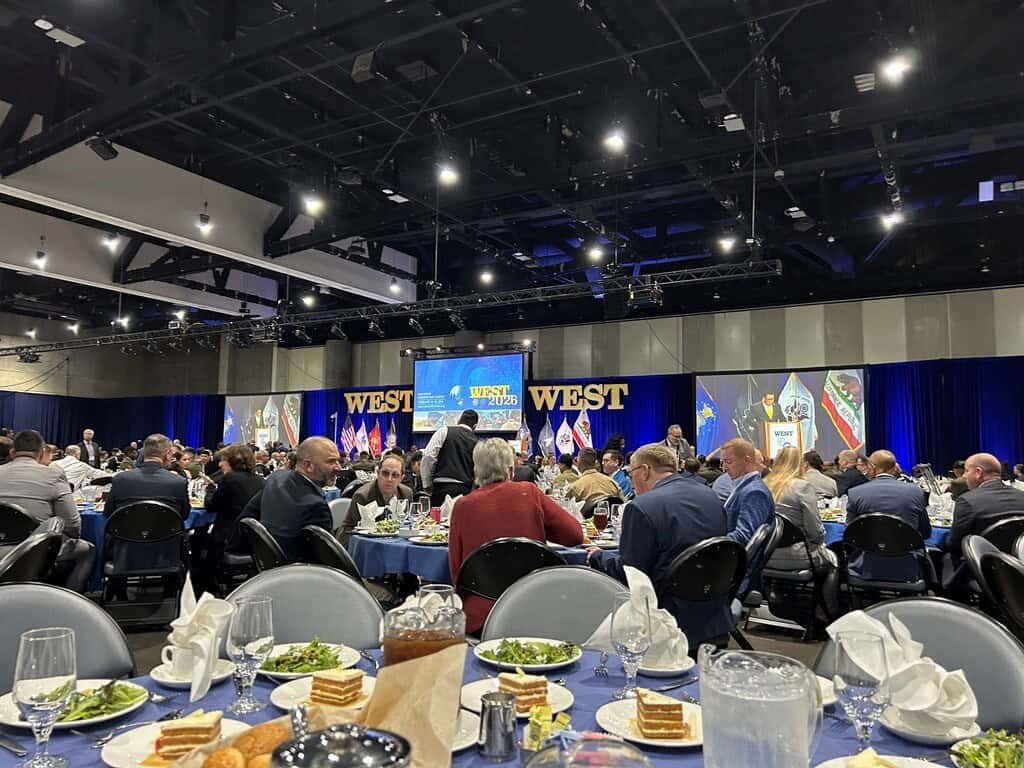
At the annual three-day WEST conference in San Diego, co-hosted with AFCEA International and the United States Naval Institute (USNI), leaders from the Navy, Marine Corps, and Coast Guard gathered to address the critical issues impacting global and local maritime security.
The Readiness Mandate Chief of Naval Operations Adm. Daryl Caudle, Marine Corps Commandant Gen. Eric Smith, and Coast Guard Commandant Adm. Kevin Lunday focused on the delicate balance between modernization and force readiness. Key discussions covered shipbuilding, industry collaboration, and a push to get sea services to 80% combat surge readiness. Adm. Lunday emphasized that new assets require stable, predictable funding to be effective.
Key Takeaways from the Five Eyes Discussion A prominent panel featuring naval attachés from the Five Eyes nations—the UK, Australia, New Zealand, Canada, and the US—explored emerging threats and strategic alliances:
- Indo-Pacific Pressure: With 2027 on the horizon, the Five Eyes are closely monitoring China’s movements, emphasizing that a coordinated presence is the primary means of resilience and deterrence.
- Strategic Alliances: Resilience depends on military, political, and diplomatic engagement both within the Five Eyes and with vital partners like the Philippines, Japan, and South Korea.
- Industrial Strategies: Canada’s Defence Industrial Strategy serves as a roadmap for innovation, while the UK welcomes international pressure to increase defense spending in the face of resource constraints.
- Coast Guard Impact: The panel reached a consensus on the U.S. Coast Guard’s essential, often under-recognized role in global maritime security.
Senetas at WEST: The Race for Sovereign Encryption
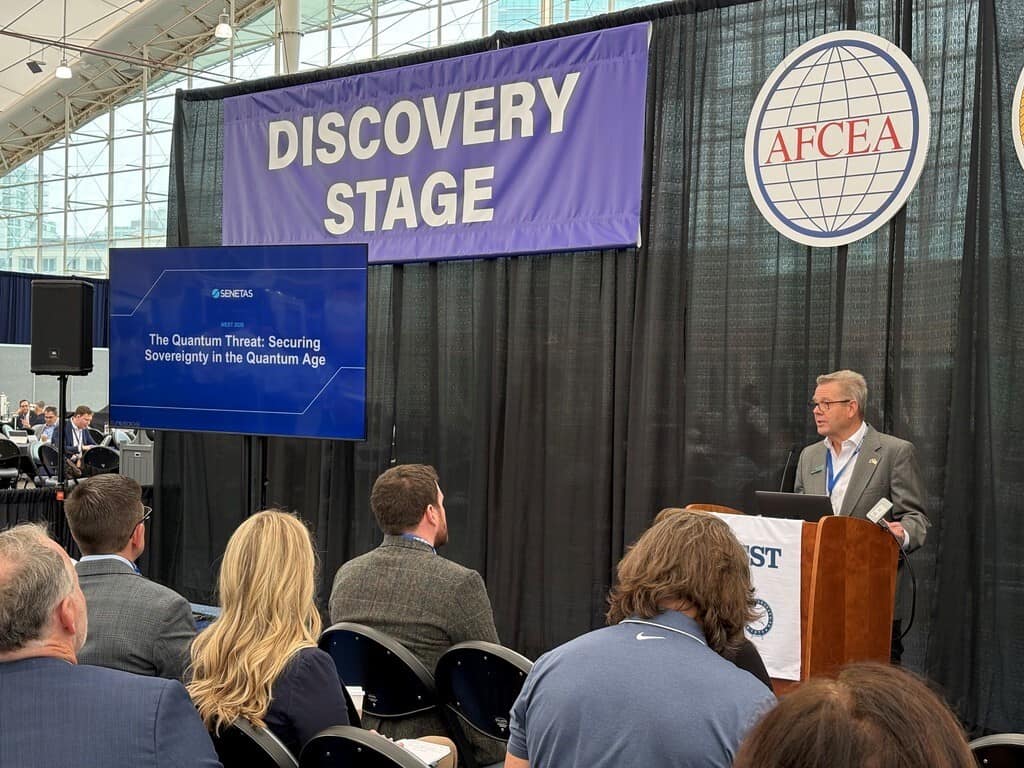
During the event, we had the opportunity to present on the shifting landscape of digital defense. For decades, nations have outsourced digital security to allies, assuming a level of geopolitical stability that no longer exists. Today, electronic warfare is a core component of military capability, and encryption is no longer just a technical choice – it is a matter of national sovereignty.
Our presentation highlighted three key areas for the “Quantum Age”:
- The End of “Security by Proxy”
The certainty of global stability is eroding. To maintain economic and social trust, national security now requires Sovereign Capability – maintaining absolute control over the cryptographic keys that protect your most sensitive data and national infrastructure. - Quantum Readiness vs. The “Wait and See” Pitfall
The arrival of Cryptographically Relevant Quantum Computers (CRQCs) will render current public-key algorithms, like RSA, completely vulnerable. This isn’t a simple vulnerability; it’s a potential catastrophic failure of energy infrastructure and command systems. Governments are already moving:- The US: Directed all agencies to transition to Post-Quantum Cryptography (PQC) by 2030.
- The EU: Implementing a roadmap to future-proof critical infrastructure.
- Australia: Identified sovereign encryption as core to the 2023-2030 Cyber Security Strategy.
- Resilience through “Cryptographic Agility”
You cannot simply “switch on” quantum security during a crisis. It is a multi-year structural overhaul. True resilience requires Cryptographic Agility—the ability to evolve and replace algorithms as standards mature without re-engineering entire infrastructures.
The question is no longer if we need post-quantum security, but whether we will implement it on our own terms before legacy systems fail us.